Logo

Experience a tailored walkthrough of our solution and find out how it fits your workflow perfectly.

Contact Us

Get early access

Stay updated with our latest news and offers.

Follow Us

Audiology EHR with audiogram documentation, device tracking, and AI-powered scheduling

Audiology EHR with audiogram documentation, device tracking, and AI-powered scheduling

Digital Patient Chart supports audiology practices with specialty-specific SOAP templates, audiogram documentation linked directly to the patient record, and hearing device inventory tracking. The AI scheduling engine coordinates provider time, room availability, and equipment access so patients move through evaluations, fittings, and follow-ups without gaps. From check-in to checkout, the system manages patient flow, generates billing with audiology-specific CPT codes, and processes payment before the patient walks out.

  • Audiogram results inside the clinical record

    Document hearing test results with graphical audiogram representations attached directly to the SOAP note. Results stay with the patient, visible to any provider who opens the chart.

  • Hearing device inventory and fitting history

    Track hearing aids, assistive devices, fittings, adjustments, and maintenance schedules per patient. The full device history lives inside the patient record, not in a separate spreadsheet.

  • AI-coordinated scheduling for rooms and equipment

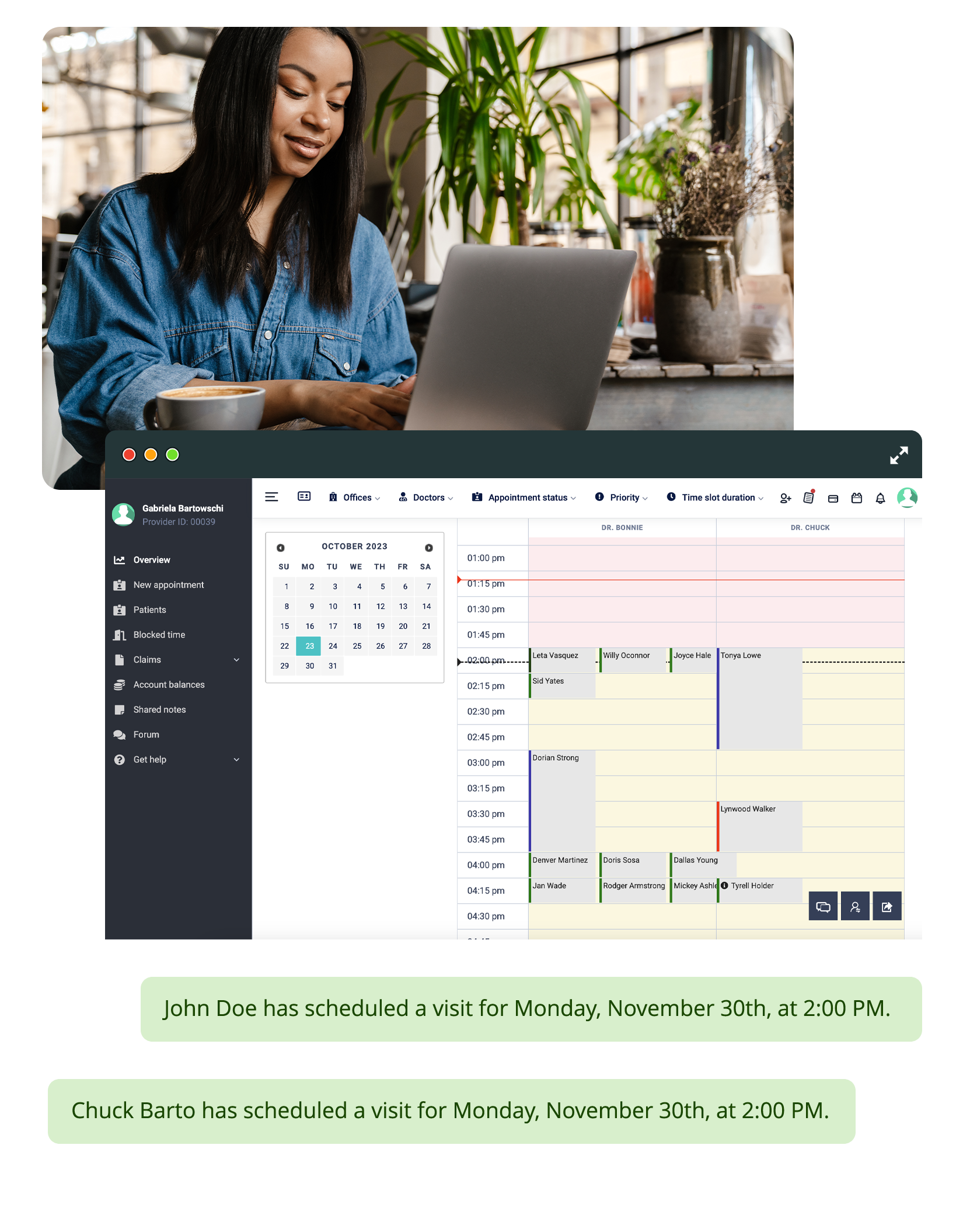
    The scheduling engine manages more than provider calendars. It allocates sound booths, audiometry equipment, and fitting rooms alongside provider availability so nothing sits idle and no patient waits for a room that is already occupied.

  • Automated patient flow from arrival to checkout

    Once the patient checks in, the AI routes them through each segment of the visit based on appointment type, provider assignment, and room availability. Front desk sees every patient\u2019s status. Providers see their own.

What the platform does for audiology practices

Specialty-specific SOAP templates for audiology

The form builder creates SOAP note templates with fields specific to audiological exams: hearing thresholds, speech recognition scores, tympanometry results, and device recommendations. The AI reads these field definitions and maps transcription data to the correct sections during voice-to-SOAP documentation.

Audiogram integration in clinical documentation

Audiogram results attach directly to the SOAP note as part of the objective findings. Providers view historical audiograms alongside current results within the same record. No separate imaging software. No file downloads. The data is inside the chart.

Device inventory with patient-level tracking

Each hearing device is logged with make, model, serial number, fitting date, and adjustment history. When a patient returns for a follow-up, the provider sees exactly which device was fitted, what settings were applied, and what adjustments were made at each prior visit.

AI scheduling across providers, rooms, and equipment

A hearing evaluation requires a sound booth, an audiometer, and a provider. A fitting requires a fitting room and a different block of time. The scheduling engine coordinates all three resource types in a single view, preventing double-booking of rooms or equipment even when multiple providers share the same physical space.

Real-time patient flow management

The system tracks each patient through arrival, intake, testing, consultation, fitting, and checkout. Time spent in each segment is recorded. Bottlenecks surface in real time so the front desk can adjust routing before wait times compound. Providers see only their assigned patients. Front desk sees the full board.

Audiology-specific billing at checkout

CPT codes for audiometry, tympanometry, hearing aid evaluations, and device fittings populate automatically based on the services documented in the SOAP note. The invoice separates each service line with the correct code and modifier. Payment processes before the patient leaves.

Automated appointment reminders for follow-up care

Hearing aid fittings require follow-up visits for adjustments and real-ear measurements. The system sends reminders via email and push notification based on the follow-up schedule attached to the treatment plan. No-show tracking flags patients who miss adjustment appointments so the practice can re-engage before outcomes suffer.

Structured Onboarding for Audiology Practices

Audiology practices transitioning from paper audiograms or generic EHR systems need their existing device records, patient histories, and audiometric data migrated without losing detail. Our onboarding team handles the configuration of audiology-specific SOAP templates, device inventory setup, room and equipment scheduling, and staff training on the AI-managed patient flow, so the practice operates at full capacity from the first week.

Read More


Structured Onboarding for Audiology Practices

Frequently Asked Questions

Shape

Is there an EHR that supports audiogram documentation inside the patient chart?

Digital Patient Chart attaches audiogram results directly to the SOAP note as part of the clinical record. Providers view current and historical audiograms within the patient chart without opening separate imaging software or downloading files. The audiogram data is linked to the visit record and accessible to any authorized provider.

Can an EHR track hearing aid inventory and fitting history per patient?

Digital Patient Chart maintains a device inventory with per-patient tracking that includes make, model, serial number, fitting date, settings, and every adjustment made at subsequent visits. The full device history is stored inside the patient record and visible during any future appointment.

How does scheduling work for audiology practices with shared sound booths?

The AI scheduling engine manages providers, rooms, and equipment as separate resource types within a single calendar. When an appointment is booked, the system checks provider availability, sound booth availability, and equipment availability simultaneously. Double-booking a room or piece of equipment is prevented at the scheduling level, not caught after the fact.

Does the system handle audiology-specific CPT codes for billing?

Audiology CPT codes for services like audiometry, tympanometry, hearing aid evaluations, and device fittings populate based on what was documented in the SOAP note. Each service line carries the correct code and modifier. The invoice generates at checkout with per-service detail, and payment processes before the patient leaves.

Can the AI generate SOAP notes from voice during audiology appointments?

The provider speaks naturally during the encounter. The system transcribes in real time and maps the spoken content to the audiology-specific fields defined in the practice\u2019s custom SOAP template. A reasoning model then reviews the note after the visit and produces the final clinical documentation with appropriate diagnostic codes.

How does patient flow tracking work in an audiology practice?

From check-in, the AI routes each patient through the visit segments defined by their appointment type: intake, testing, consultation, fitting, or follow-up. The system tracks time per segment in real time. The front desk sees every patient\u2019s current status. Providers see only their assigned patients. If a sound booth runs over, the system surfaces the delay immediately so staff can adjust the flow before the waiting room backs up.

See how the system manages audiogram documentation, device tracking, and room scheduling in a live demo

See how the system manages audiogram documentation, device tracking, and room scheduling in a live demo

Get a Demo

We use first-party cookies to run this site and understand how patients find us. Privacy