Logo

Experience a tailored walkthrough of our solution and find out how it fits your workflow perfectly.

Contact Us

Get early access

Stay updated with our latest news and offers.

Follow Us

Cardiology EHR with diagnostic imaging, cardiac testing documentation, and AI clinical intelligence

Cardiology EHR with diagnostic imaging, cardiac testing documentation, and AI clinical intelligence

Digital Patient Chart supports cardiology practices with a built-in DICOM viewer for echocardiograms, stress test imaging, and cardiac catheterization results linked directly to the patient record. Specialty-specific SOAP templates capture EKG findings, cardiac risk assessments, medication management, and procedural documentation. The AI scheduling engine coordinates providers, diagnostic equipment, and procedure rooms so patients move through consultations, testing, and follow-ups without scheduling conflicts or idle equipment.

  • DICOM imaging inside the clinical record

    View echocardiograms, stress test images, angiograms, and cardiac CT results through the built-in DICOM viewer with integrated PACS storage. Images attach to the patient record and display inside the SOAP note. No third-party imaging software required.

  • Cardiac-specific SOAP templates with voice documentation

    Build SOAP note fields for EKG interpretation, ejection fraction values, stress test protocols, hemodynamic data, and medication titration. The AI transcribes the provider\u2019s voice and maps findings to the correct fields during the encounter.

  • Equipment and procedure room scheduling

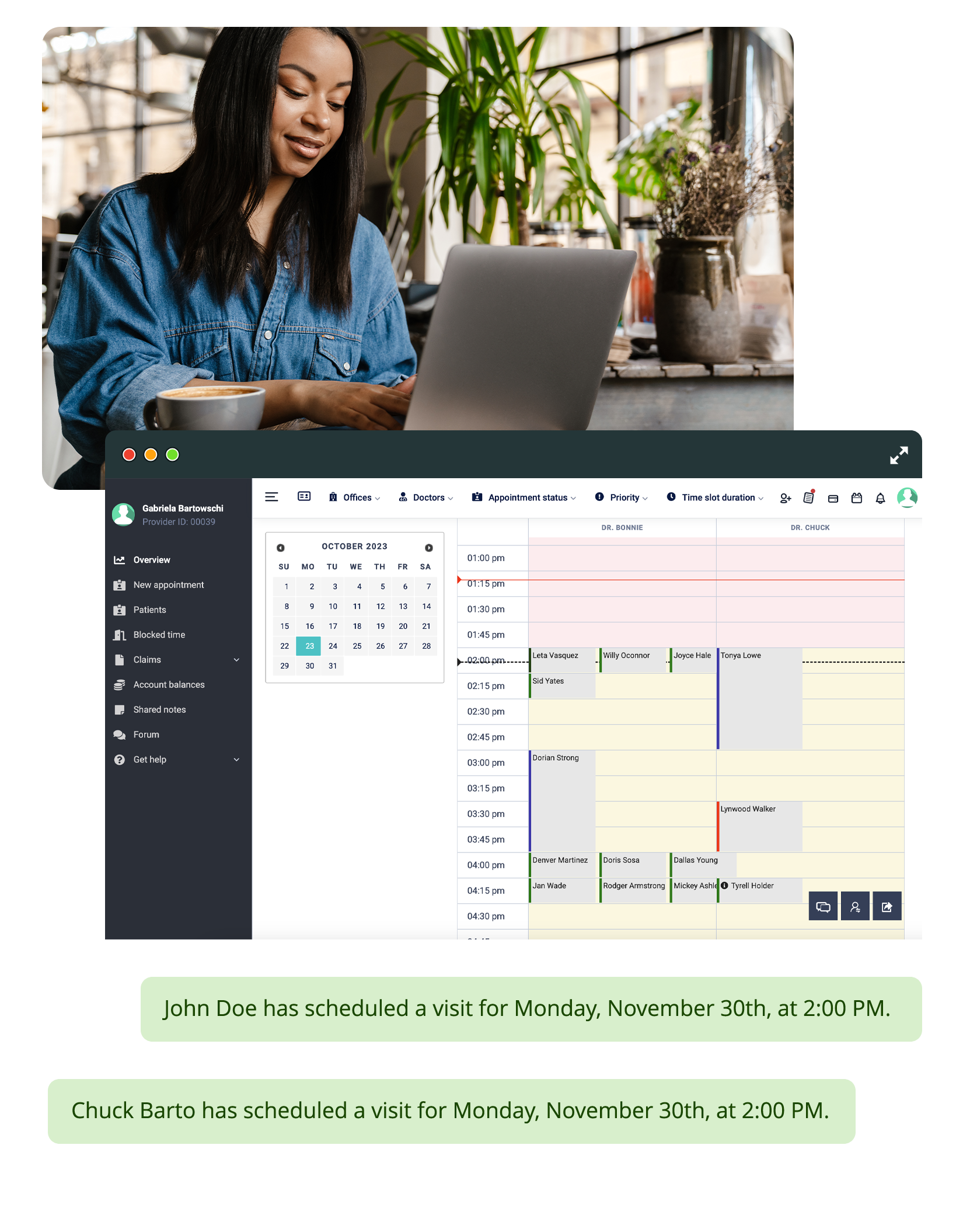
    Stress test treadmills, echo machines, Holter monitors, and procedure rooms schedule alongside providers in a single calendar. The AI prevents double-booking of equipment when multiple cardiologists share the same diagnostic resources.

  • Longitudinal cardiac risk tracking

    Blood pressure trends, lipid panels, ejection fraction changes, and medication adjustments track across visits. The AI surfaces relevant trends during pre-visit analysis so the provider sees the trajectory before the patient sits down.

What the platform does for cardiology practices

Built-in DICOM viewer with local PACS storage

Echocardiograms, nuclear stress images, coronary angiograms, and cardiac CT scans display through the native DICOM viewer without launching external software. Images store locally on the practice\u2019s PACS server. No cloud dependency. No third-party viewer license. The imaging data stays on hardware the practice controls.

Specialty-specific SOAP templates for cardiology encounters

The form builder creates fields for EKG interpretation, cardiac auscultation findings, ejection fraction, valve assessments, stress test results, and catheterization data. During voice documentation, the AI reads the template schema and places each finding in the correct field. Providers dictate a full cardiac workup without touching the keyboard.

Medication management with longitudinal tracking

Cardiac patients often manage multiple medications with frequent dose adjustments. The system tracks each medication change within the clinical record: drug, dose, date started, date changed, reason for adjustment, and response at follow-up. The provider sees the full medication timeline without opening separate pharmacy records.

AI scheduling for diagnostic equipment and procedure rooms

A stress test requires a treadmill, monitoring equipment, and a provider for a specific block of time. An echo requires a sonographer and an ultrasound machine. The scheduling engine manages all resource types in one calendar. When a treadmill is booked for one patient, it is unavailable for another patient in the same time slot regardless of which provider ordered the test.

Pre-visit analysis with cardiac risk context

Before the patient arrives, the AI reviews their record: prior EKGs, imaging results, lab trends (lipids, BNP, troponin history), medication changes, and symptom progression documented in previous SOAP notes. The provider walks in with a summary of what has changed since the last visit rather than spending the first five minutes scrolling through the chart.

Procedure documentation with imaging attachment

Cardiac catheterization reports, ablation summaries, and device implant records document inside the SOAP note with associated DICOM images attached to the same visit record. The clinical narrative sits alongside the visual evidence in one view. No separate procedure log. No detached imaging files.

Cardiology-specific billing with automated code population

CPT codes for EKGs, echocardiograms, stress tests, Holter monitoring, catheterization, and office consultations populate from the documented services. Each service line carries the correct code, modifier, and fee from the cardiology service catalog. The invoice generates at checkout and payment processes before the patient leaves.

Structured Onboarding for Cardiology Practices

Cardiology practices depend on diagnostic imaging workflows that must integrate cleanly with clinical documentation from day one. Our onboarding team configures the DICOM viewer and local PACS connection, builds cardiology-specific SOAP templates, sets up equipment and procedure room scheduling, and trains providers on voice documentation with cardiac terminology so the practice runs imaging-integrated appointments from the first week.

Read More


Structured Onboarding for Cardiology Practices

Frequently Asked Questions

Shape

Is there an EHR with a built-in DICOM viewer for cardiology imaging?

Digital Patient Chart includes a native DICOM viewer with integrated local PACS storage. Echocardiograms, stress test images, angiograms, and cardiac CT scans display inside the patient record without launching external imaging software. Images attach directly to the SOAP note for the visit where they were ordered or reviewed.

Can the EHR schedule diagnostic equipment like stress test treadmills and echo machines?

The scheduling engine manages providers, rooms, and diagnostic equipment as separate resource types within a single calendar. When a stress test is booked, the system reserves the provider, the treadmill, and the monitoring room simultaneously. Equipment cannot be double-booked across providers even when multiple cardiologists share the same resources.

Does the system support SOAP note templates for cardiac workups?

The form builder creates custom SOAP fields for EKG interpretation, ejection fraction, valve assessments, stress test protocols, hemodynamic data, and medication management. The AI maps voice transcription to these specific fields during the encounter. The provider dictates findings naturally and the system structures the documentation according to the template.

How does pre-visit analysis work for cardiology patients?

Before the patient arrives, the AI reviews their complete record including prior imaging results, lab trends, medication changes, and symptom progression from previous visits. It surfaces what has changed since the last encounter so the provider starts the appointment with relevant context rather than reviewing the chart manually.

Can procedure reports and imaging attach to the same visit record?

Cardiac catheterization reports, ablation summaries, and device implant documentation are written inside the SOAP note with DICOM images from the procedure attached to the same visit record. The clinical narrative and the imaging evidence exist in a single view within the patient chart.

How does cardiology billing work at checkout?

CPT codes for EKGs, echocardiograms, stress tests, Holter monitoring, catheterization, and consultations populate based on the services documented in the SOAP note. Each service line carries the correct code and modifier from the cardiology service catalog. The invoice generates at checkout with per-service detail and payment processes before the patient leaves.

See how cardiac imaging, equipment scheduling, and voice documentation work together in a live demo

See how cardiac imaging, equipment scheduling, and voice documentation work together in a live demo

Get a Demo

We use first-party cookies to run this site and understand how patients find us. Privacy