
Experience a tailored walkthrough of our solution and find out how it fits your workflow perfectly.
Contact Us
- +1 (346) 772 7281
- [email protected]
- 17350 State Highway 249, Ste 220 Houston Texas 77064
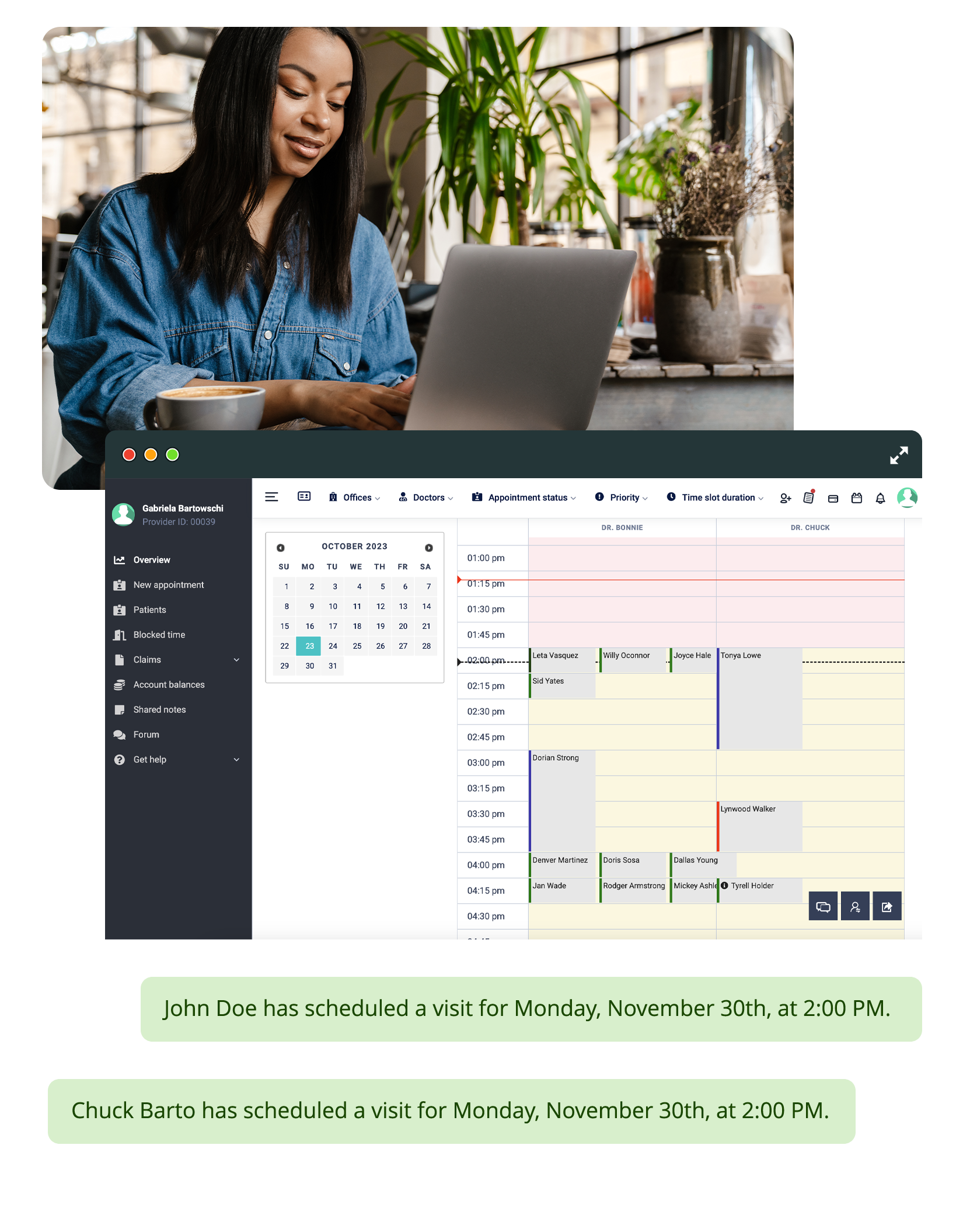
Digital Patient Chart supports ophthalmology practices with ophthalmic imaging through the built-in DICOM viewer, detailed eye exam templates, and longitudinal tracking of visual acuity, intraocular pressure, and disease progression. OCT scans, fundus photos, visual fields, and fluorescein angiography attach directly to the patient record. The AI scheduling engine coordinates providers, diagnostic equipment, and procedure rooms so patients move through refraction, diagnostic testing, and examination without equipment conflicts.
OCT scans, fundus photography, visual field maps, and fluorescein angiography display through the built-in DICOM viewer with local PACS storage. Images attach to the visit record and compare against prior studies within the same chart.
Build SOAP fields for visual acuity, refraction, slit lamp findings, tonometry, dilated fundus exam, and specialized testing results. The AI maps voice documentation to these fields during the encounter.
Visual acuity measurements, intraocular pressures, and visual field results track longitudinally. The provider sees trends in disease markers over time to assess treatment response for glaucoma, macular degeneration, and diabetic retinopathy.
The scheduling engine manages providers alongside OCT machines, visual field analyzers, laser equipment, and procedure rooms. Equipment reserves automatically with the appointment.
What the platform does for ophthalmology practices
Ophthalmology practices rely on imaging workflows that need to integrate with clinical documentation and per-eye tracking from the start. Our onboarding team configures the DICOM viewer and local PACS, builds ophthalmic exam SOAP templates with per-eye fields, sets up diagnostic equipment scheduling, and trains providers on AI voice documentation with ophthalmic terminology so imaging-integrated exams work from the first week.
Read More


We use first-party cookies to run this site and understand how patients find us. Privacy